Home Purchases
Home Purchase Mortgages in Hamilton, Burlington and Southern Ontario
Know your budget, your down payment and your closing costs before you make an offer.
The short answer
To buy a home in Ontario, you need at least 5% down on the first $500,000 of the price and 10% on the rest, up to $1,499,999. At $1.5 million or more, the minimum is 20%. Plan for closing costs of about 1.5% to 4% of the price, and get pre-approved before you start looking.
How buying with a mortgage agent works
People often call this working with a mortgage broker. I’m a licensed mortgage agent with DLC National Ltd., a mortgage brokerage, and I have access to over 100 lenders, including major banks, credit unions, monoline lenders and alternative lenders. A bank can show you its own products. I can compare several lenders and explain why one fits you better than another.
- We talk through your plans. I review your income, debts, credit and down payment.
- You get pre-approved. I look at the lenders that suit your situation and ask for a rate hold where one is available.
- You shop with a real number. When you find a home, we go over the property and the financing before you commit.
- The lender approves you and the property. Your lawyer handles the closing, and I stay with you until you have your keys.
On most residential mortgages the lender pays the brokerage, so there is no fee to you. If a fee would apply, as it can with private and some alternative mortgages, I’ll tell you in writing before you commit.
How much down payment do you need?
The minimum depends on the purchase price. These rules apply across Canada.
| Purchase price | Minimum down payment | Example |
|---|---|---|
| $500,000 or less | 5% | $450,000 home: $22,500 |
| $500,001 to $1,499,999 | 5% of the first $500,000, plus 10% of the rest | $700,000 home: $45,000 |
| $1,500,000 or more | 20% of the full price | $1,600,000 home: $320,000 |
You can estimate your own numbers with my purchase calculator.
What mortgage default insurance costs
With less than 20% down, your lender will require mortgage default insurance from CMHC, Sagen or Canada Guaranty. The insurance protects the lender. You pay for it through a one-time premium based on your mortgage amount.
| Down payment | 25-year amortization | 30-year amortization |
|---|---|---|
| 5% to 9.99% | 4.00% | 4.20% |
| 10% to 14.99% | 3.10% | 3.30% |
| 15% to 19.99% | 2.80% | 3.00% |
Premiums shown are CMHC’s. Sagen and Canada Guaranty set their own. A 30-year amortization on an insured mortgage is available to first-time buyers and buyers of newly built homes.
Plan for the sales tax. The premium can be added to your mortgage. Ontario’s 8% sales tax on the premium cannot, so you pay it at closing. On a $700,000 home with $45,000 down, the premium is $26,200 and the sales tax is $2,096.
Getting pre-approved
A pre-approval shows the most a lender may lend you, based on your income, debts, credit and down payment. It can also hold a rate, usually for 60 to 130 days depending on the lender.
A pre-approval is not a final approval. The lender still has to approve the property and confirm your documents, and it can decline even after pre-approving you. That’s why we review the property together before your offer becomes firm.
Here is what I usually ask for:
- Recent pay stubs and a letter of employment
- T4 slips and your two most recent CRA Notices of Assessment
- Proof of your down payment
- Government-issued ID
If you’re self-employed, the documents are different. My self-employed mortgage page explains how lenders look at your income.
How the stress test affects your budget
Federally regulated lenders must qualify you at the higher of your contract rate plus 2% or 5.25%. This applies to both insured and uninsured mortgages. Lenders that aren’t federally regulated may use the same test.
Lenders also look at how much of your gross income goes to housing and debt. The general guideline is 39% for housing costs and 44% for all debts combined. Rules vary by lender, and I’ll show you what you qualify for and what would change it.
Closing costs in Ontario
Budget about 1.5% to 4% of the purchase price on top of your down payment. Land transfer tax is usually the largest item, so check that number first.
| Cost | Typical amount |
|---|---|
| Ontario land transfer tax | $10,475 on a $700,000 home |
| Sales tax on mortgage insurance | 8% of the premium, if you have less than 20% down |
| Legal fees and disbursements | $1,500 to $2,500, plus HST |
| Title insurance | $200 to $500 |
| Home inspection | $400 to $600 |
| Appraisal | $300 to $500, sometimes covered by the lender |
| Property tax and utility adjustments | Depends on your closing date |
Ontario land transfer tax is 0.5% on the first $55,000, 1% from $55,000 to $250,000, 1.5% from $250,000 to $400,000 and 2% above $400,000. A 2.5% rate applies above $2,000,000 when the land has one or two single-family homes. Toronto adds its own municipal land transfer tax, which doesn’t apply in the areas I serve.
My closing cost calculator and land transfer tax calculator will give you a closer estimate.
Mortgages for your situation
- Buying your first home: see my first-time home buyer guide for the FHSA, the Home Buyers’ Plan, the land transfer tax refund and the new-home rebates.
- Moving to a new home: you may be able to keep your current rate and terms by porting your mortgage, which avoids breaking it. We can compare that with a new mortgage.
- Buying a duplex to live in: try my Duplex Purchasing Power calculator, or read about multi-family mortgages.
- Building a home: see construction loans.
- Buying a cottage or rural property: see rural and cottage mortgages.
- Teachers, nurses and first responders: see my teachers, nurses and first responders programs.
- When a bank has said no: private and alternative lending may be an option. These mortgages cost more and are usually short term.
Buying in your area
The mortgage rules are the same across Ontario. The properties are not, and lenders look at them differently.
- Hamilton: many lower-city homes are 80 to 120 years old, so lenders and insurers may ask about wiring, oil tanks and the roof.
- Burlington: many homes sell for over $1 million, which makes the down payment formula and the $1.5 million insurance limit especially important.
- Brantford: homes typically sell for less than in Hamilton or Burlington, and Highway 403 connects you to both.
- St. Catharines and Niagara: you’ll find condos, freehold townhouses and older detached homes, and Brock University keeps rental demand steady.
- Caledonia and Haldimand County: new builds can close one to three years out, and rural homes may need well and septic checks.
- The Kawarthas: lenders treat year-round homes and seasonal cottages very differently, so it helps to check before you make an offer.
Questions buyers ask
What down payment do I need on an $800,000 house in Ontario?
The minimum is $55,000. That’s 5% of the first $500,000 ($25,000) plus 10% of the remaining $300,000 ($30,000).
Can I put less than 20% down on a home that costs $1.5 million?
No. Mortgage insurance isn’t available at $1,500,000 or more, so the minimum down payment is 20% of the price, or $300,000. At $1,499,999, the minimum is about $125,000.
Does a pre-approval guarantee my mortgage?
No. A lender can still decline after a pre-approval, usually because of the property, your documents or a change in your situation.
How early should I get pre-approved?
When you expect to start looking within the next few months, since rate holds usually last 60 to 130 days. If you’re further out, we can still go over your numbers so you know what to work on.
Do I pay you for arranging my mortgage?
On most residential mortgages, no. The lender pays the brokerage. If a fee would apply, I’ll tell you in writing before you commit.
Is there a downside to using a mortgage agent or broker?
Sometimes. Not every lender works with brokers, and a broker isn’t the right fit for every situation. I wrote about this in 5 reasons you shouldn’t work with a mortgage broker.
I’m happy to sit down and talk with you about your options.
Get pre-approved289-244-6979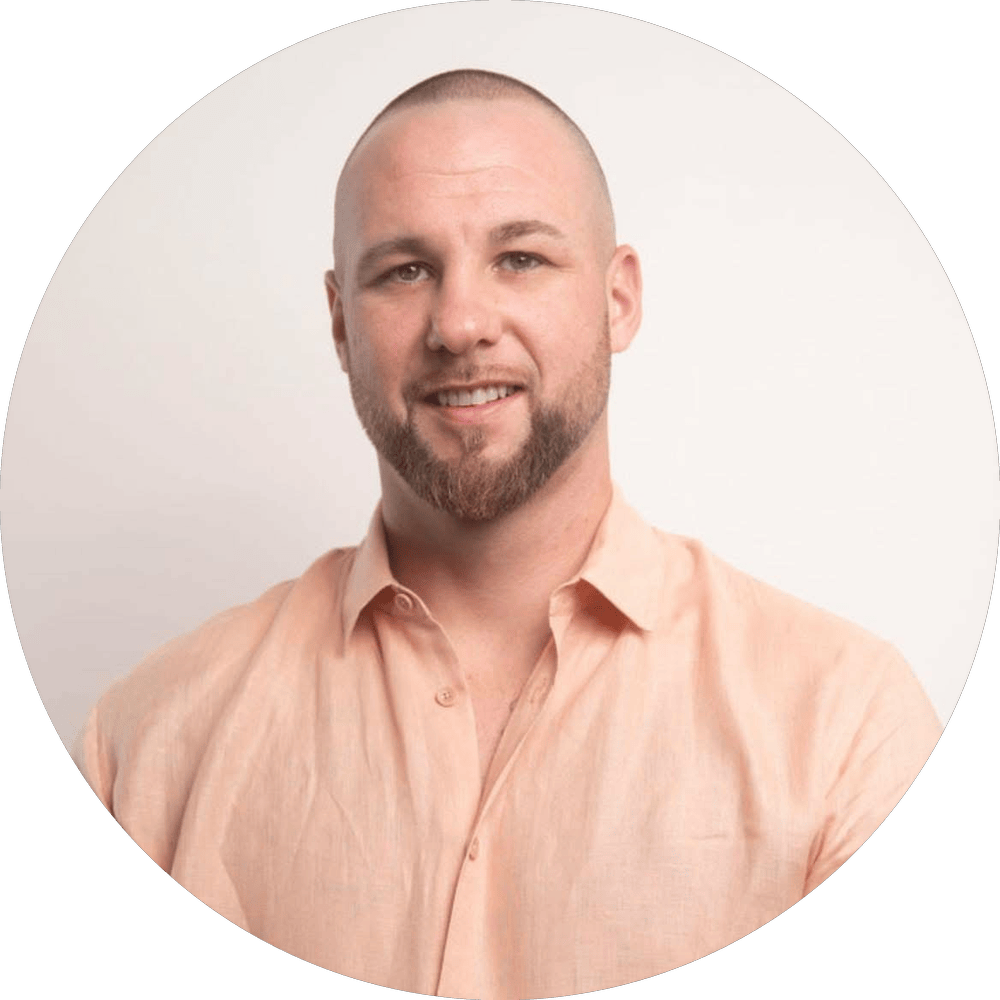
Dustin Arruda, Level 2 Mortgage Agent, Lic. #M19001236, DLC National Ltd., FSRA #12360
I’ve helped clients across Southern Ontario for over seven years, from my office at 901 Guelph Line in Burlington. More about me.
Sources: CMHC, down payment rules; CMHC, 30-year premiums; FCAC, stress test; FCAC, pre-approval; Ontario Ministry of Finance, land transfer tax. Cost ranges are my own estimates. This page is general information, and rules can change. Reviewed November 2026.